Architecture
AcmeTasker is a task management system built for teams to create, assign, and track work.
This document describes how the system is structured and how components interact.
Overview
AcmeTasker follows a standard web application architecture:
- Client (frontend)
- API (backend)
- Database
- External services
The API layer is stateless and designed for horizontal scaling.
High-Level Architecture
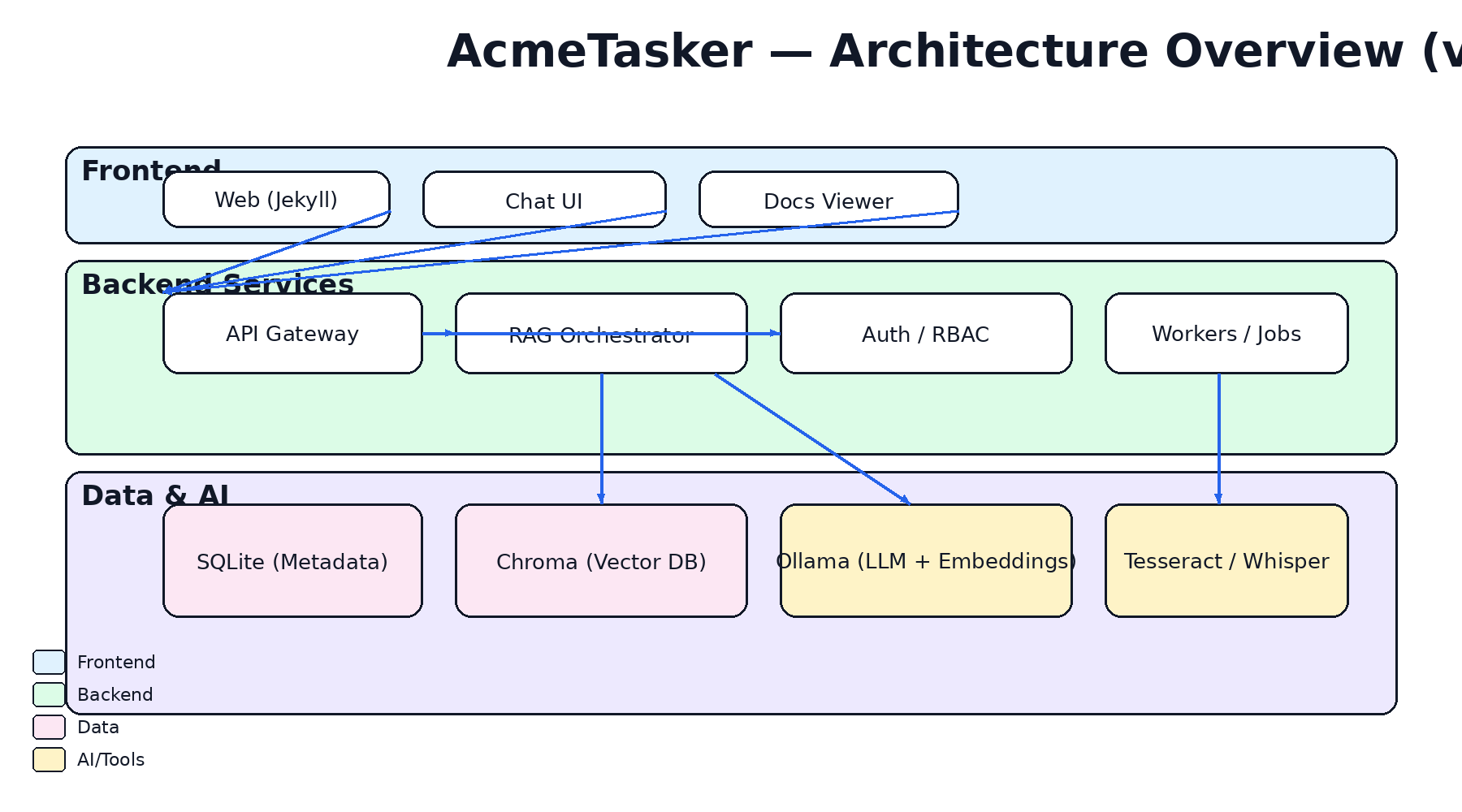
Components
Client
- Runs in the browser
- Handles user interaction and rendering
- Sends requests to backend services
API
- Processes all incoming requests
- Contains business logic
- Handles validation and workflows
Database
- Stores application data
- Uses a relational model
External Services
- Authentication provider
- Email service
- Analytics tools
Request Flow
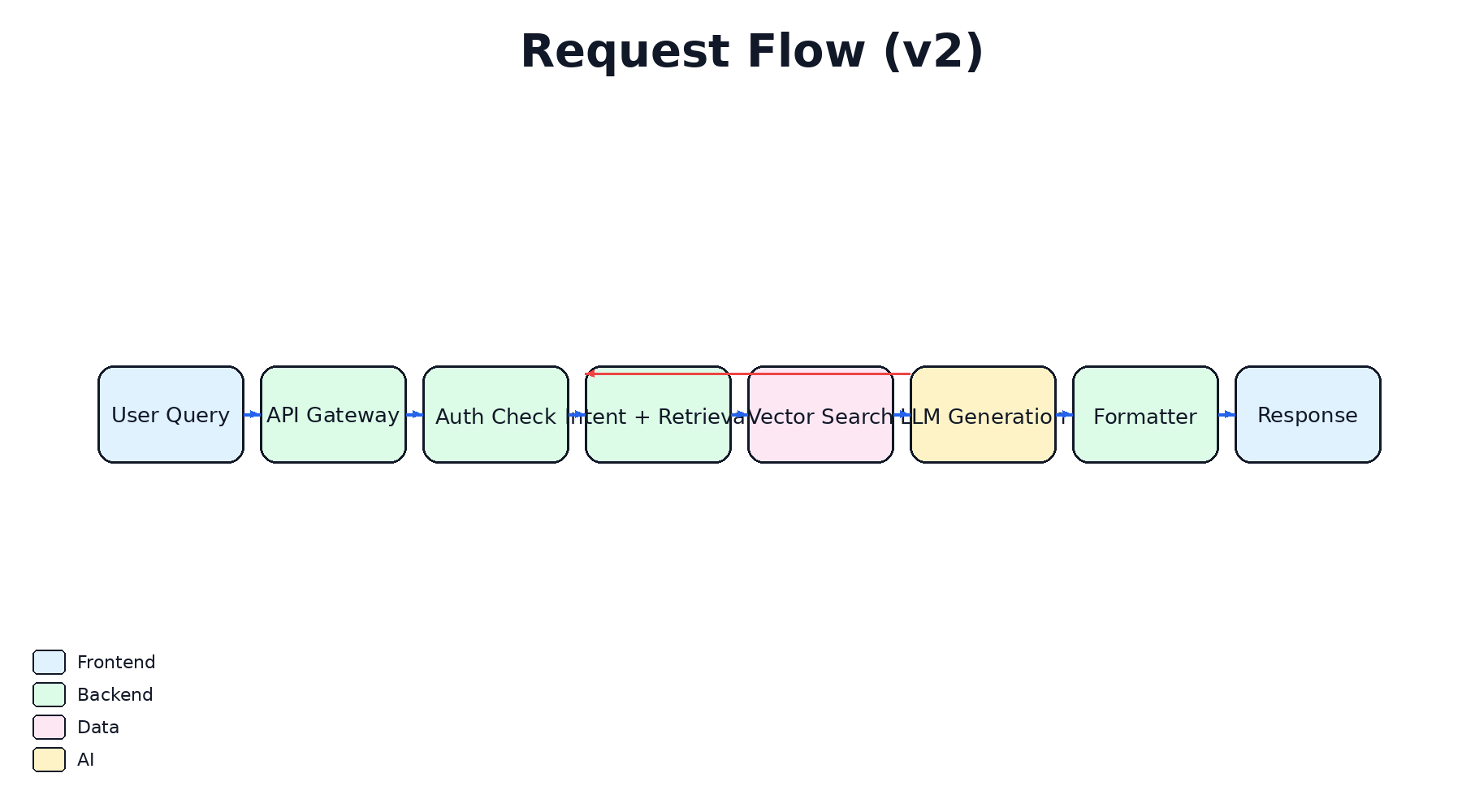
- User performs an action in the UI
- Client sends a request to the API
- API validates and processes the request
- Data is written to or read from the database
- Response is returned to the client
Core Modules
User Module
- Handles authentication and user profiles
- Manages access control
Project Module
- Manages projects and team associations
Task Module
- Handles task creation, updates, and assignment
- Tracks task status and lifecycle
Data Model
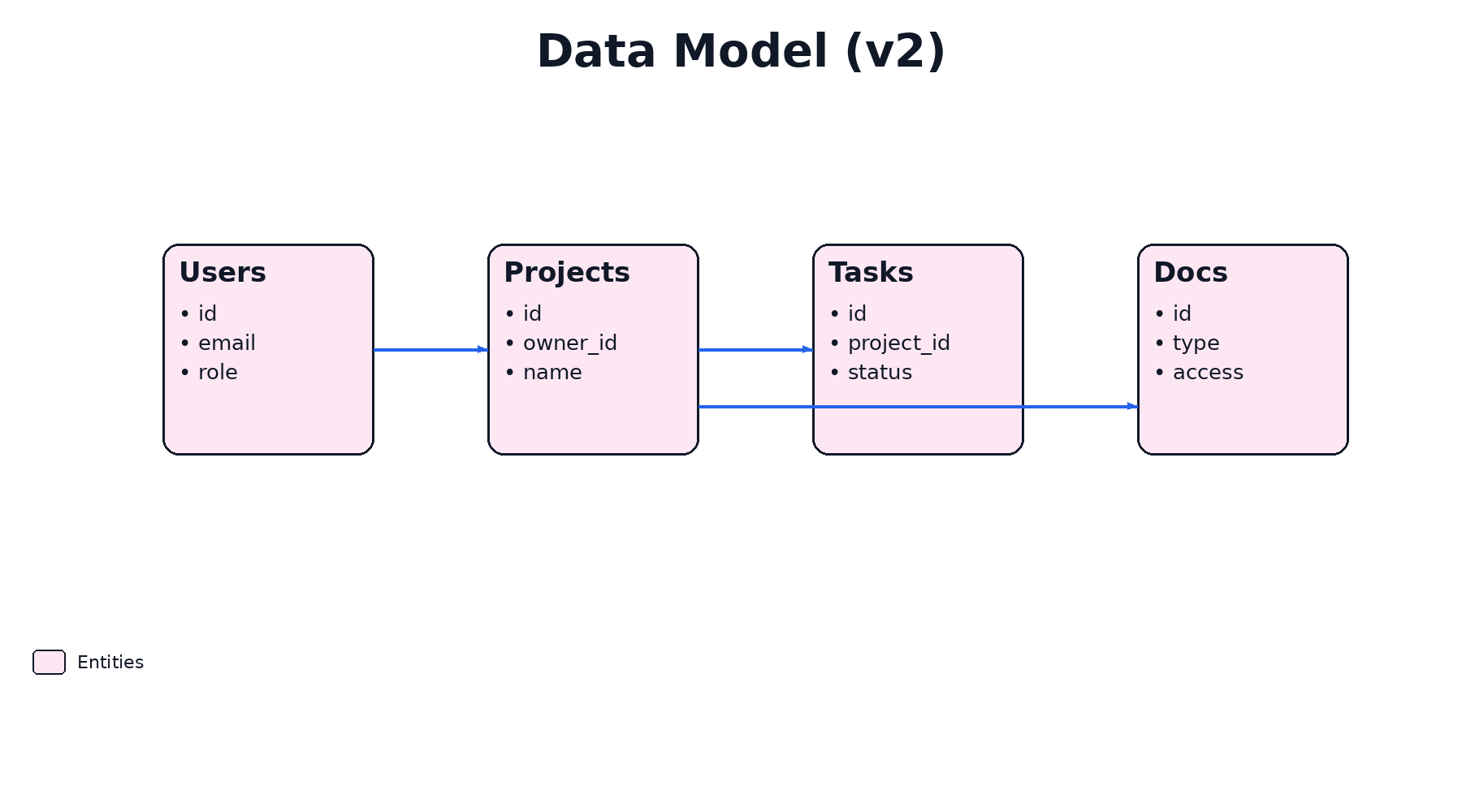
Entities
Users
- id
- name
Projects
- id
- name
Tasks
- id
- title
- status
- assigned_to
Relationships
- One user can have multiple tasks
- One project can contain multiple tasks
Authentication
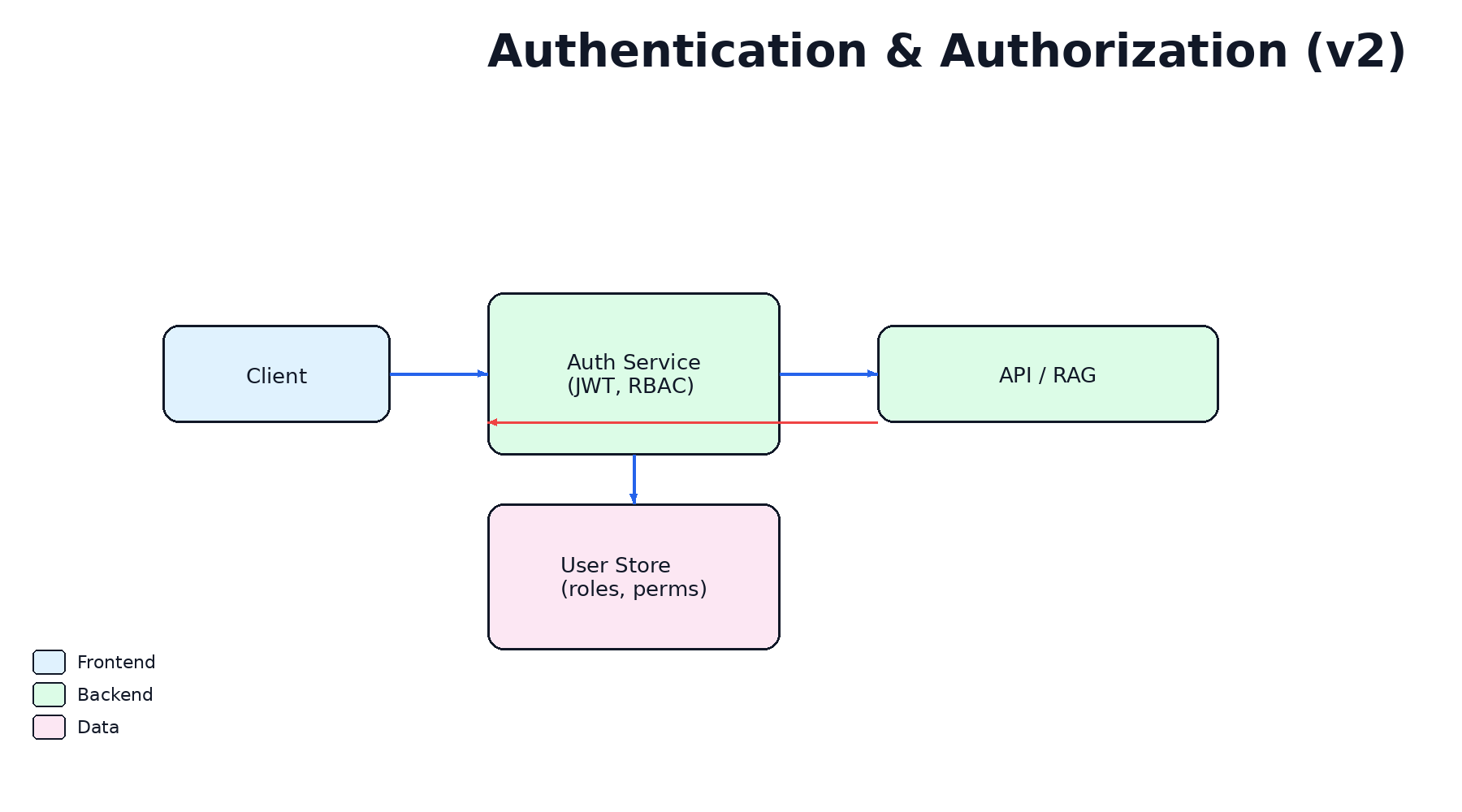
- Users authenticate via an external provider
- A token is issued after successful login
- The token is used for all subsequent requests
Deployment
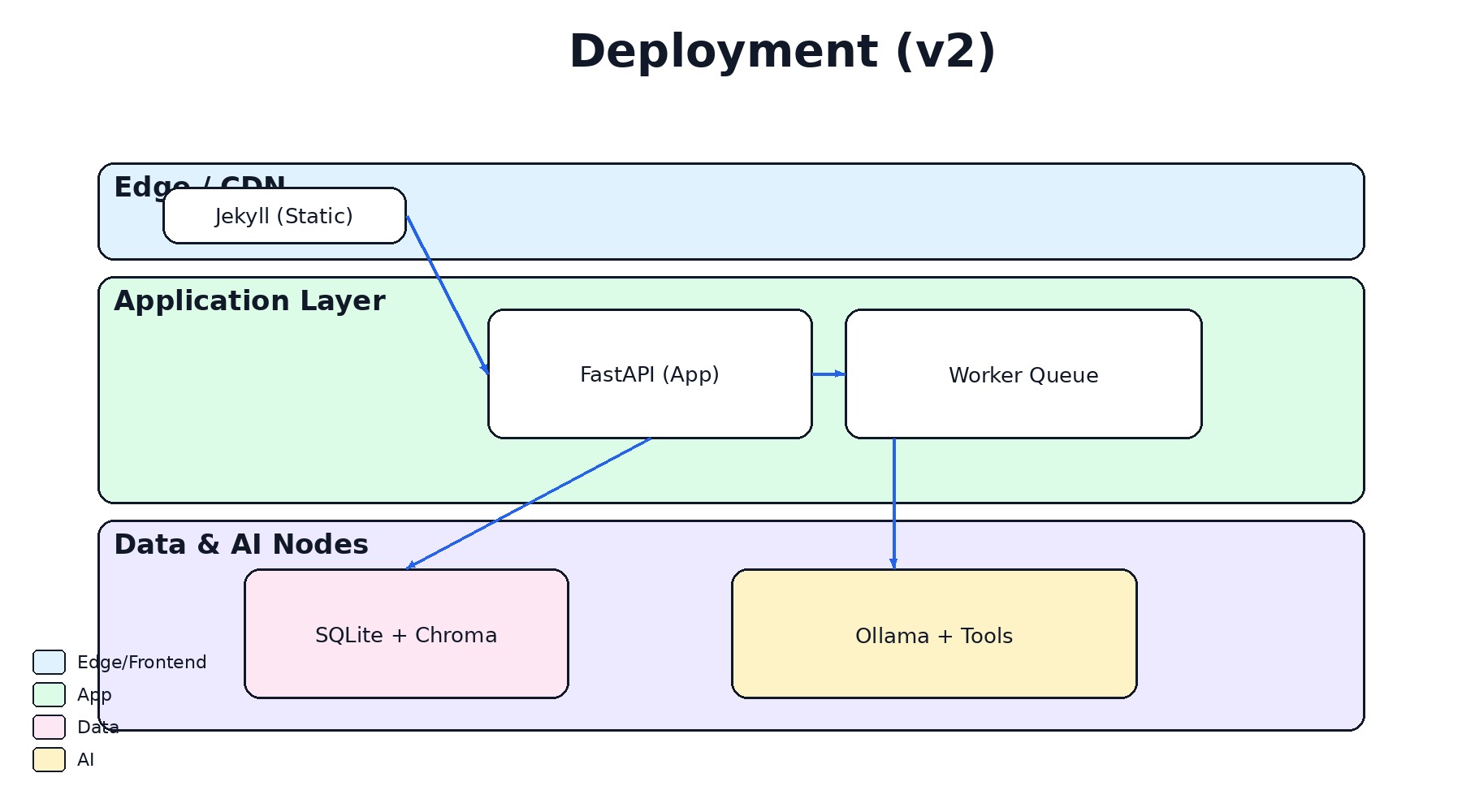
- Client is served via CDN
- API is deployed on cloud infrastructure
- Database is a managed service
Scalability
- Stateless API design
- Horizontal scaling supported
- Load balancing at the entry layer
- Optional caching layer for performance
Security
- HTTPS enforced for all requests
- Token-based authentication
- Input validation at API layer
- Role-based access control
Observability
- Application logs
- Error tracking
- Basic performance metrics
Notes
This architecture supports:
- Real-time task workflows
- Scalable usage as teams grow
- Clean separation between components
For endpoint-level details, see the API documentation.